



Moving Beyond 90:90:90: Reconsidering Seating Through a Dynamic Systems Lens
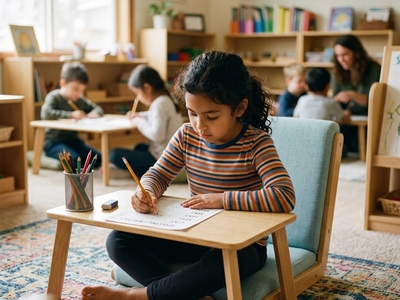
Why 90:90:90 Doesn’t Hold in Real Classrooms
Have you ever found yourself adjusting a child’s posture in a classroom, guiding hips, knees, and feet into alignment, only to watch that position gradually dissolve within minutes? This is a familiar experience in school‑based practice and one that invites reflection on what we are actually trying to achieve when we think about “optimal” seating.
For many of us, 90:90:90 was introduced as a neutral starting point: a way of organising the body to support function. It provided a clear, teachable structure and a shared language across disciplines. In early clinical education, it served an important purpose by directing attention to base of support, joint alignment, and the relationship between proximal stability and distal function.However, as practice has increasingly moved into complex, real‑world environments such as classrooms, the limitations of this guideline have become more apparent. The assumption that a fixed geometric position can support dynamic processes—attention, regulation, participation—does not hold when we observe how children actually engage with learning.
Over time, a consistent pattern emerges. Even when positioned carefully, most children do not remain still. They shift, lean, wrap their legs around chair legs, perch on the edge of the seat, or settle into asymmetrical positions. These behaviours are often interpreted as problems to be corrected. Viewed through a different lens, however, they can be understood as adaptive responses: ongoing attempts by the body to organise itself in response to task demands, environmental input, and internal state.
Posture as a Dynamic, Context‑Dependent Process
From a sensory integration perspective, posture is not an isolated variable. It is part of a continuous perception–action loop in which sensory input and motor output are integrated to support adaptive behaviour. The nervous system is constantly processing information about gravity, contact, movement, and spatial orientation and using that information to make real‑time adjustments. Functional posture, in this context, is not a fixed position but a capacity for ongoing adaptation.
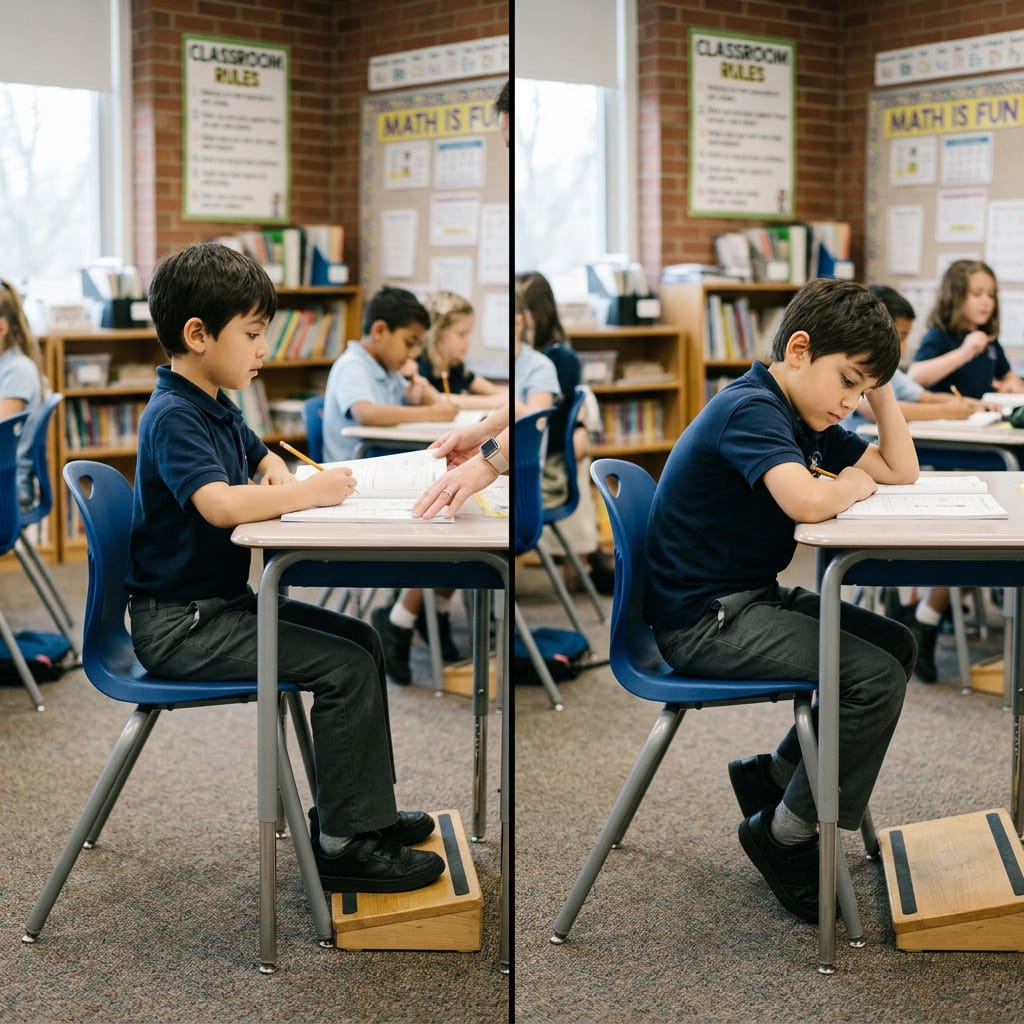
When this system is working efficiently, posture appears fluid and responsive rather than rigid. This challenges the idea of a single optimal position. The body is not designed for stillness; it is designed to redistribute effort over time. Contemporary ergonomics reflects this shift, moving away from idealised postures toward the promotion of postural variability. The idea that the best position is the next position captures this well.
Sustained stillness carries a cognitive cost: the effort required to maintain posture competes directly with the resources needed for learning. When regulatory capacity is diverted to “sitting correctly,” access to the curriculum, as required under IDEA, is diminished, even if the posture appears optimal.
When we consider postural development more closely, the limitations of a fixed position become even more apparent. Functional posture is not simply about maintaining alignment; it supports a range of integrated processes including ocular motor coordination, respiratory efficiency, and the development of rotational movement. The coupling between head movement and eye control relies on ongoing vestibular input, which is inherently linked to subtle shifts in posture and orientation. Similarly, the dynamic relationship between the diaphragm and pelvic floor depends on variability in trunk position and pressure distribution, both of which are constrained in a fixed, right-angled configuration. Opportunities for rotation, weight shifting, and dissociation between body segments are central to the development of coordinated movement and visual-motor integration. When posture is held rigidly, these processes are reduced, and the system has fewer opportunities to develop the integrated patterns that support functional participation in learning.
This is where more flexible approaches to seating become clinically meaningful. Rather than prescribing a single position, contemporary practice focuses on creating conditions that allow for variability within structure. Joint angles are better understood as functional ranges rather than fixed requirements. An open hip angle (often between 95 and 110 degrees) can support more effective load distribution through the pelvis and spine, facilitate respiration, and reduce overall muscular effort.
Importantly, this shift is not about replacing one standard with another. It reflects a move away from prescribing posture independently of context. Posture emerges from the interaction between the body, the environment, and the task. This aligns with a dynamic systems perspective, in which behaviour arises from the interaction of multiple systems over time rather than a single controlling variable.
What Changes in Classrooms When Posture Is Dynamic
In classroom environments, this perspective has clear implications. Seating is not simply about where a child sits but about how the environment supports participation. Classroom‑based observations and emerging research highlight how seating arrangements influence attention, behaviour, and engagement. Peer proximity, visual and auditory distractions, and opportunities for movement all contribute to cognitive load and regulatory demand.
Flexible seating, when implemented thoughtfully, aligns with these principles. It introduces variability without abandoning structure. Students may have access to traditional chairs, standing desks, floor seating, or active seating surfaces. The goal is not unrestricted choice but meaningful choice within clear expectations. Children learn not only how to use these options, but when they are appropriate and how to remain accountable to shared learning goals.
What stands out in classrooms that adopt this approach is not simply the presence of alternative seating, but changes in participation. Educators frequently report improved engagement and reduced behavioural disruption. While this is often attributed to increased student agency, it is equally important to consider regulation. Movement in these environments is not incidental; it provides ongoing vestibular and proprioceptive input that supports arousal modulation and sustained alertness.
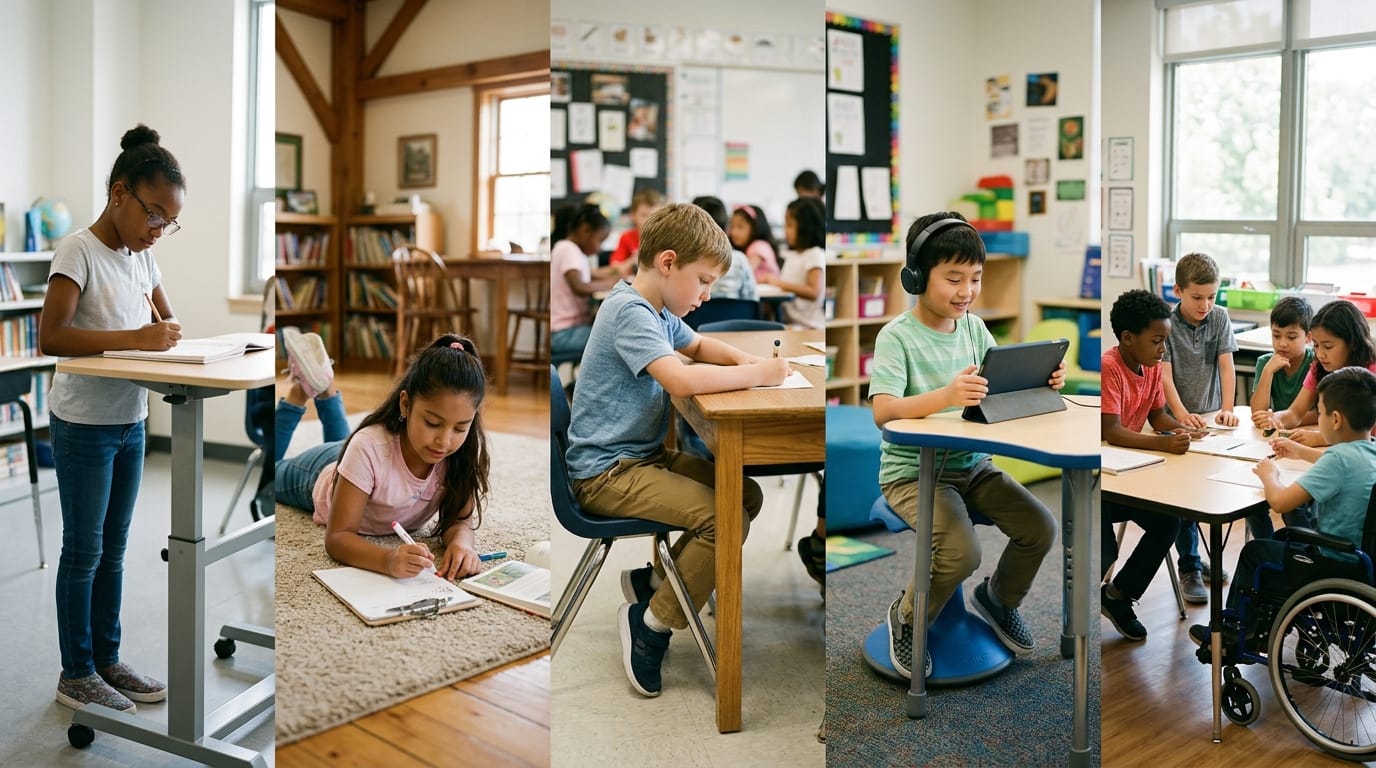
Subtle shifts in position, changes in weight‑bearing, and variations in orientation all contribute to maintaining a state of calm readiness for learning. This can be understood as a form of environmental regulation built into the classroom structure.
The idea of a “sensory buffet” is helpful here. Rather than enforcing a single posture, the environment offers a range of sensory‑motor experiences that support different regulatory needs. A child who benefits from increased alertness may organise more effectively at a standing desk or on a movement‑permissive surface. Another child may achieve greater regulation through the increased contact and stability of floor seating. These preferences reflect differences in nervous system organisation rather than compliance or motivation.
From a proprioceptive perspective, surface contact plays a particularly important role. Increased contact enhances information about body position and movement, contributing to a sense of physical security. For some children, the floor provides a broader base of support and greater stability at the level of the nervous system, supporting emotional regulation and availability for learning.
From Seating Choices to Participation Outcomes
Moving beyond 90:90:90 does not mean abandoning ergonomic principles altogether. Visual access and alignment remain important. Regardless of position materials should be arranged to minimise sustained neck flexion and awkward visual angles. Desk height, surface orientation, and line of sight continue to influence comfort and performance.
These considerations reflect a broader shift in how occupational therapists and physical therapists conceptualise their role in educational settings. The focus moves from positioning individual bodies toward designing environments that support participation. This requires collaboration with educators, attention to classroom routines, and sensitivity to how environmental factors interact with individual differences.
It also invites reconsideration of outcomes. If the goal is compliance with a specific posture, 90:90:90 offers a clear metric. If the goal is meaningful participation, different indicators become more relevant: sustained engagement, effective self‑regulation, relationships with peers, and the ability to recover from dysregulation.
This shift aligns with neuroaffirming and equity‑focused practice. Bodies organise differently, and learners do not require identical conditions to participate meaningfully. Moving away from a single prescribed posture does not lower expectations; it aligns expectations with participation rather than conformity.
For practitioners, this transition can require letting go of familiar visual markers of “good” posture and developing new observational skills. It involves trusting children’s capacity to self‑organise when the environment supports them and engaging educators in conversation about structure, movement, and learning.
At STAR Institute, this work is grounded in an understanding of development as an integrated, dynamic process. Sensory integration, regulation, and relationships are interconnected systems that shape participation. Seating is one element within a broader ecology that can either support or constrain engagement.
Moving beyond 90:90:90 is therefore not simply a technical adjustment. It reflects an evolution in practice that prioritises adaptability, coherence, and participation. The question becomes not how to position the child, but how to create the conditions in which the child can organise themselves.
TL;DR
The 90:90:90 seating position was never meant to be a fixed solution, yet in classrooms it’s often treated as one. Children’s movement and shifting are not signs of inattention or noncompliance but adaptive strategies their nervous systems use to support regulation and engagement. Posture is dynamic and context dependent, shaped by sensory input, task demands, and environment, not a static ideal.
When classrooms allow for postural variability, movement supports attention, regulation, and participation rather than competing with them. Moving beyond 90:90:90 shifts the goal from positioning bodies into compliance to designing environments that support self organization and meaningful participation in learning.