


$139 Advanced Ends May 29 — Save $40

3 days live + 60-day on-demand + community access
June 10-12, 2026 | LIVE
Daily | 8:00am-1:30pm MT
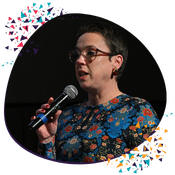 Virginia Spielmann (she/her), PhD, OTR/L
Executive Director
STAR Institute
USA
Host
Virginia is a well-travelled speaker, coach and educator on topics including sensory integration, DIR/Floortime, child development and infant mental health. She has conducted trainings in Kenya, Australia, the Philippines, Vietnam, Hong Kong, and the USA and leads workshops at international conferences.
Virginia is a founder and former Clinical Director of SPOT (Speech, Physical, and Occupational Therapy) Interdisciplinary Children's Therapy Center in Hong Kong, where she led a large and widely respected inter-disciplinary team.
Virginia obtained her BSc in Occupational Therapy in Oxford England (2002) and her Masters in Occupational Therapy from Mount Mary University, Milwaukee (2018). She is a DIR/Floortime Training Leader and Expert and clinical consultant for the Interdisciplinary Council for Development and Learning (ICDL). Her extensive pediatric experience includes children on the autism spectrum, as well as those with Sensory Processing Disorder, infant mental health issues, adoption, developmental trauma.
Virginia has considerable post-graduate training, she is certified on the SIPT and is currently completing her Ph.D. in Infant and Early Childhood Development with an emphasis on mental health, with Fielding Graduate University, in Santa Barbara. She is a published author and contributed to the STAR Frame of Reference as part of the 4th Edition of Frames of Reference for Pediatric Occupational Therapy, alongside Dr. Miller and Dr. Schoen.
Kieran Rose (he/him) 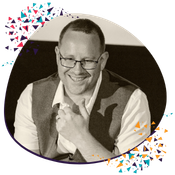
Consultant, Writer, Advocate
The Autistic Advocate
United Kingdom
Co-Host
Kieran Rose is an internationally recognised Autistic author, academic researcher, and consultant with a background in SEND education and public service delivery for Autistic adults. Diagnosed as Autistic in 2003 and the parent of three Autistic children with varying support needs, Kieran draws on personal and professional experience to challenge stigma, deconstruct traditional autism narratives, critically reflect, and reframe understanding through an intersectional lens.
Kieran delivers specialist training and consultancy globally, working with professionals, organisations, and institutions to foster reflective practice, challenge ideologies, and promote affirming approaches to Autistic experiences and Neurodivergence. He guest-lectures at universities across the UK and is a regular guest lecturer on 5 teaching streams at the Anna Freud Centre. He also supervises mental health specialists and education professionals, supporting the development of inclusive, compassionate practices. He is also a former lead trainer and content creator for the National Autism Trainer Project for NHS England, and is a consultant and trainer for the HSC in Northern Ireland.
Kieran is a faculty member and consultant for the STAR Institute, a leading US-based organisation in Occupational Therapy practice and research, and also a faculty member of the Universidad de Castilla-La Mancha in Spain, as Lecturer on the ‘Specialist Degree in Supporting Autistic People from a Transdisciplinary and Inclusive Approach’.
Kieran’s academic research focuses on Autistic Masking, victimisation, stigma, intimate partner violence, and lifeworld approaches to care, with ongoing projects exploring Monotropism, Autistic identity, suicidality, and experiences of therapy. He is an Honorary Research Associate at the University of Sunderland, an external collaborator at University College London and Durham University, and a peer reviewer for leading autism journals.
Among having published various chapters, along with leading autism researcher, Assistant Professor of Developmental Psychology Dr Amy Pearson of Durham University, Kieran has co-authored, the highly acclaimed book ‘Autistic Masking: Understanding Identity Management and the Role of Stigma’, a groundbreaking academic touchstone exploring identity development for Autistic people, what masking means and what it happens in response to, and what that can mean for professional practice.
Outside of work, Kieran enjoys reading and watching Science Fiction and Horror, researching the Paranormal, cooking, stargazing with his children, and occasionally finding the brain space to write for his platform, The Autistic Advocate, which has been read by millions worldwide.
Karen Gravett (she/her), PhD 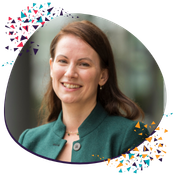
Associate Professor of Higher Education, and Associate Head (Research)
University of Surrey
United Kingdom
Dr Karen Gravett is Associate Professor of Higher Education and Associate Head (Research) at the University of Surrey, UK, where her research focuses on the theory-practice of higher education. She is a member of the Society for Research in Higher Education Governing Council, a member of the editorial board for Teaching in Higher Education, and Learning, Media and Technology, and Associate Editor for Sociology. She is a Principal Fellow of the Higher Education Academy. She is also an Honorary Associate Professor for the Centre for Assessment and Digital Learning at Deakin University. Karen’s latest books are: Gravett, K. (2025) Critical Practice in Higher Education, and Gravett, K. (2023) Relational Pedagogies: Connections and Mattering in Higher Education.
Understanding Non-belonging in a Changing World
This presentation will draw upon recent research and practice to explore how we can understand non-belonging in contemporary times. We will consider when non-belonging can be understood as a result of exclusionary practices, and when non-belonging might be understood as a legitimate choice. Such complexity disrupts simplistic approaches to fostering inclusivity and belonging and raises new questions about this important area.
After participating in this session, attendees should be able to:
- Understanding and problematising non-belonging as a concept
- Understanding what belonging and non-belonging might mean for different groups
- How and who can support belonging?
- How might we better understand non-belonging?
Naureen Hunani (she/her), RD 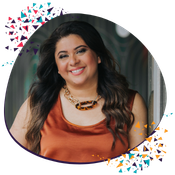
Registered Dietitian
RDs for Neurodiversity
Canada
Naureen Hunani is a multiply-registered dietitian with over 18 years of clinical experience. She is the founder of RDs for Neurodiversity, an online continuing education platform dedicated to neurodiversity-informed care for healthcare professionals.
In her private practice in Montreal, Canada, Naureen supports children, adults, and families navigating feeding and eating challenges through a trauma-informed, neuro-inclusive, weight-inclusive, and anti-oppressive approach.
With extensive experience working with neurodivergent individuals, she advocates for early identification of feeding differences, inclusion, and acceptance. Naureen has shared her expertise at national and international conferences and is deeply passionate about helping professionals build neurodiversity-affirming practices.
In 2023, she was honored with ASAN’s "Nothing About Us Without Us" Award for her commitment to advocacy and inclusion related to neurodivergent feeding differences and her work in eating disorders.
Lovette Jallow (she/her) 
Author, Lecturer, Inclusion Strategist
Sweden
Lovette Jallow is a nine-time award-winning author, strategist, and global speaker specializing in neurodivergence, anti-racism, and structural equity. A Black autistic woman with lived experience across West Africa and Europe, Lovette brings a rare combination of critical insight, applied systems thinking, and lived expertise to institutions seeking to move beyond performative inclusion.
Her work spans sectors including humanitarian coordination, neurodiversity consulting, and cultural policy reform offering institutions tools to confront how race, disability, and power are embedded in diagnostics, education, and organizational design. She is the founder of Black Vogue, a platform that challenged the Eurocentric beauty industry and reshaped public discourse on racial representation in Scandinavia. Rather than a lifestyle project, Black Vogue served as a structural critique of how Black women are erased, regulated, and pathologized insights she expands in her published books, which are now used in academic and policy contexts.
Lovette is also the founder of Action for Humanity, an independent humanitarian initiative working across Sweden, The Gambia, Libya, and Lebanon to support refugee repatriation, anti-racism education, and advocacy for marginalized neurodivergent communities. Her lectures have been delivered at universities, international summits, and corporate institutions addressing how white supremacy, ableism, and structural neglect define mainstream inclusion frameworks.
She does not deliver awareness talks. She offers systems critique, evidence-informed tools, and strategies rooted in justice not compliance. Her work affirms that true inclusion requires not just access, but structural accountability.
Diamond Rashad (she/her), OTD, OTR/L 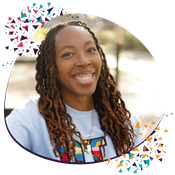
Occupational Therapist
A Dime of OT
USA
Dr. Diamond Rashad (she/her) is an occupational therapist with nine years of experience in sensory integration, pediatric feeding therapy, lactation support, and working with children and adolescents with neurodevelopmental and neurological conditions. She received her Master of Health Science in Occupational Therapy from Augusta University in 2016, and her Doctorate of Occupational Therapy (specialty in pediatrics) from Rocky Mountain University of Health Professions in 2019.
Dr. Rashad's expertise spans clinical practice, research, mentorship, and advocacy, particularly with research and presentations at national conferences on the topics of neurodiversity, maternal health, and cultural responsiveness. She currently serves as a Coalition of Occupational Therapy Advocates for Diversity (COTAD) Board Member. She continues to contribute to workshops and virtual courses focused on neurodiversity-affirming strategies, early intervention, and inclusive play for occupational and speech therapists.
Bryden Carlson-Giving (he/him), OTD, OTR/L 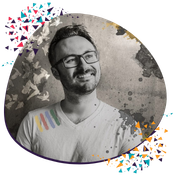
Occupational Therapist
Neurodivergent Nexus
USA
Bryden is a neurodivergent and disabled occupational therapist working in the public schools, where he combines clinical expertise with lived experience to advance inclusive, anti-ableist practice. He earned his post-professional doctorate from Boston University, where he developed a toolkit to help OTPs challenge ableism in pediatric settings—work that led to the creation of the EMPOWER model, the first neurodiversity-focused occupational therapy framework. Bryden is the founder of Neurodivergent Nexus, an online hub for resources supporting anti-ableist OT practice, and the recipient of Boston University’s Emerging Leader Award. He is also the editor of Neurodiversity-Affirming Occupational Therapy: Empowering Approaches to Foster Neurodivergent Participation, out in March 2026.
Morénike Giwa Onaiwu, PhD (she/they) 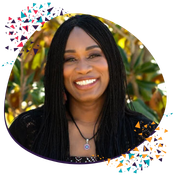
Advocate/Public Speaker/Writer
Advocacy Without Borders
USA
Dr. Morénike Giwa Onaiwu, PhD (she/they) is a global human rights, neurodiversity, and disability justice leader and transdisciplinary activist-scholar. Dr. Giwa Onaiwu is also a multiply neurodivergent and multiply disabled author, educator, and proud parent in a neurodiverse, multicultural, twice-exceptional serodifferent biological and adoptive family. A prolific writer and content expert with lived and learned expertise whose multimodal work focuses on participatory research, meaningful community involvement, intersectionality, and accessibility, Dr. Giwa Onaiwu serves as Founder/Principal Operator of Advocacy Without Borders, a grassroots nonprofit initiative, and as a Research Fellow within the Life Course Outcomes division at Drexel University’s AJ Drexel Autism Institute, which is the first public health-focused autism research center in the United States.
Dr. Giwa Onaiwu is a highly sought after consultant, keynote lecturer, and public speaker who has presented at the White House, the United Nations, and numerous international conferences. Dr. Giwa Onaiwu completed a term as a Public Member of the Interagency Autism Coordinating Committee, the Federal advisory committee that advises the US Secretary of Health and Human Services on issues related to autism and coordinates all federal autism efforts in the US. Dr. Giwa Onaiwu maintains membership within several global and national executive boards, including the Autistic Women & Nonbinary Network, Institute for Exceptional Care, Kind Theory, Foundations for Divergent Minds, All Neurotypes, Felicity House, Autism in Adulthood Journal, the Lurie Institute for Disability Policy, and more. Notable publications of Dr. Giwa Onaiwu's include over a dozen monograph chapter contributions, traditional, digital, and creative scholarship, and editorial work.
Follow Morénike’s work at https://MorenikeGO.com
Vesper Moore, CPS (he/they) 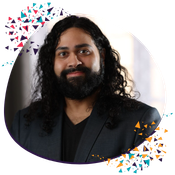
Chief Operating Officer
Kiva Centers
USA
Vesper Moore is the Chief Operating Officer of Kiva Centers and a national leader in mental health and disability rights. Their work centers on building social movements, advancing trauma-informed systems, and elevating lived experience through public speaking, education, and policy advocacy. Vesper has helped establish mental health organizations internationally and has brought the voices of people with disabilities and mental health challenges to national and global platforms. Through collaboration with the U.S. government and the United Nations, they help shape strategies on trauma, intersectionality, and disability justice. Featured by NBC News, PBS NewsHour, Politico, and at The White House, Vesper is at the forefront of legislative reform, working to transform how society understands and supports mental health.
Iris Varela (she/her) 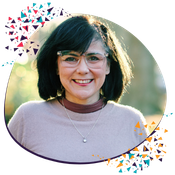
Clinical Lead- Neurodivergent Pathway for SWP and CAMHS Clinician
CaMHS/ UCL
United Kingdom
I’m Iris Varela. I’m originally from Venezuela, so Spanish is my first language. I moved to the U.S. when I was 16 and lived in Maryland with my parents. I studied Social Work and Psychology at the University of Maryland, Baltimore County for my Bachelor's, and then went on to do my master’s in social work at the University of Maryland, Baltimore, finishing in 2003.
A fun fact is that during my master’s degree, I did an internship as a play therapist at the school where "The Wire" was filmed (Season 4) — it wasn’t the same year, but I was there! I also loved seeing the Social Work building, where I had lectures, show up during the series.
In 2004, I moved to New York City, where I worked at YAI - National Institute for People with Disabilities, supporting neurodivergent children and adults through individual therapy and group sessions. I also conducted autism assessments and got the chance to speak at international conferences in both Spanish and English.
In 2005, I met my husband Craig (at work!), and I honestly don’t know how I got so lucky, and we got married in 2011. For our honeymoon, we climbed Kilimanjaro! We love traveling, trying new foods, and learning about different cultures and ways of living. Craig is from Belfast and moved to New York in 1999. I love how similar and different we are. It keeps us entertained
In 2016, we moved to London. I currently work in CAMHS. I also lead the Neurodivergence Pathway at UCL through the Anna Freud Centre, helping train mental health practitioners. Plus, I run a small private practice, and I’m lucky to be supervised by Kieran Rose. He has taught me so much!
In 2023, I was really surprised when other autistic people identified me as autistic — it completely made sense and helped me see myself in a new way. It’s been a journey of understanding myself better and becoming even more close to the neurodivergent community. I am honoured to be part of your conference.
Nyck Walsh, MA, LPC, (he/they) 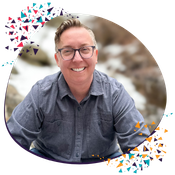
Somatic Psychotherapist and Counselor Educator
Nyck Walsh Counseling and Training Center
USA
Nyck Walsh, MA, LPC, (he/they) brings a whole person, anti-oppressive, intersectional, somatic lens to working with Autistic and KCS/VAST (what is commonly known as ADHD) folx. An Autistic and VAST counselor, Nyck is the director of Nyck Walsh Counseling & Training Center and creator of the Neurodivergent Somatics model. He curates reparative experiences for late identified Autistic and VAST folx to connect with their innate wisdom, dismantle ableism, be supported in their challenges, and unpack their lives through their unidentified and misunderstood Neurodivergent (ND) experience. His counselor education programs have created an international following, and both ND and neurotypical counselors alike report feeling deeply validated by his approach. While being human presents no shortage of complexity, Nyck delights in frolicking in nature with his 4-legged bestie (aka Tuck, the adventure cat).
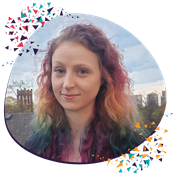 Lulu Larcenciel, B.A., M.A., (she/they)
PHD Student and Researcher
Brock University
Canada
Lulu Larcenciel (B.A., M.A., she/they) is an Autistic researcher and Child & Youth Studies PhD student whose work centers Autistic experiences within Canada's colonial care and education systems. Her transdisciplinary participatory research revolves around the development of social/self-identity and autonomy for disabled and Autistic young people, particularly those who have undergone common educational/therapeutic interventions such as behaviour-focused “social skills” classes and programs. She has also facilitated initiatives including consultation meetings between provincial and federal legislators and Autistic community leaders and the development of networks and peer spaces for neurodivergent activists and volunteers. As a community organizer, peer facilitator, and student, Lulu is fortunate and grateful to have learned from queer, crip, nonspeaking, and Autistic advocates, scholars, and kids who have enriched her analysis and studies.
Alicia A. Broderick, PhD (she/her) 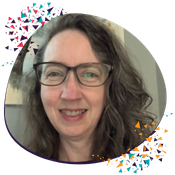
Professor of Education
Montclair State University
USA
Dr. Alicia A. Broderick has been an autism scholar for more than 20 years, and primarily positions her scholarship within Critical Autism Studies (CAS) and Critical Neurodiversity Studies (CNS) traditions. Her work explores the relationship between autism and capital, specifically the commodification of both autism and autistic people; and the production, dissemination, and consumption of knowledge about autism and autistic people. She is the author of the 2022 book, The Autism Industrial Complex: How Branding, Marketing, and Capital Investment Turned Autism into Big Business. Her current work examines the structural workings of neuronormativity, neurotypical privilege, and neurotypical ignorance in multiple spheres, including employment and education.
Becoming a Neurodivergent-Serving Institution of Higher Education (IHE)
Based upon the federal definition of being a Hispanic-Serving Institution of Higher Education (HSI), which involves not merely enrolling Hispanic students but also serving Hispanic students, employees, and communities, this presentation asks what it would look like and require for colleges and universities to become Neurodivergent-Serving Institutions (NSIs). Institutions of Higher Education (IHEs--colleges and universities) are already both neurodivergent-enrolling and neurodivergent-employing–but most remain mired in unexamined and compulsory neuronormativity–the institutions continue to operate the same old neuronormative ways, and students are required to mask as best they can or to seek ADA accommodations when they can’t. What would it take to become schools and workplaces that actively recruit, recognize, and nurture neurodivergent talent? For colleges and universities to become neuroinclusive communities welcoming of neurodiverse student bodies and neurodiverse workforces? We’ll discuss what to look for, ask for, and how to build it together. I will provide an overview of the Institute for Neurodivergent Innovation I’ve recently developed at Montclair State University, and how the Institute is working with campus partners to develop a more neuroinclusive university in which we all wish to go to school and work.
After participating in this session, attendees should be able to:
- Attendees will become familiar with and define a basic set of critical conceptual vocabulary: Terms include neuroinclusivity, neuronormativity, neurominority and neuromajority, neurodivergence, neurotypical privilege and neurotypical ignorance, and others.
- Attendees will analyze and evaluate the neuroinclusivity (or lack thereof) of university climate, policies, and practices through multiple examples provided.
- Attendees will apply the concept of being neurodivergent-serving and multiple other concepts to specific aspects of university life (e.g., curriculum, campus events, campus climate, etc.), exploring ways to make IHEs more neuroinclusive.
Warda Farah, (she/her) 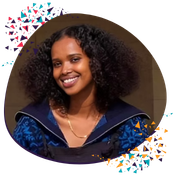
Researcher/ Speech and Language Therapist
Rounded
United Kingdom
Warda Farah is an neurodivergent Social Entrepreneur, Speech and Language Therapist, Writer and Lecturer. Her work sits at the intersection of Race, Language and Disability. Warda set up her Social Enterprise Language Waves to address the barriers that Black and minoritised families face when accessing Speech and Language Therapy services that are culturally and linguistically affirming. Her approach is guided by her own experiences as neurodivergent Black woman.
Kathleen C. Schlenz, ABD, OTR/L (she/her) 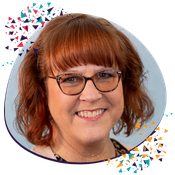
Assistant Professor, Occupational Therapy
Salem State University
USA
Kathleen is a member of the core faculty for the Occupational Therapy Department at Salem State University, where she enjoys teaching undergraduate and graduate courses that address pediatrics, interprofessional reflective practice, and social/occupational justice. She has had the great privilege of being a licensed occupational therapist for over 40 years, primarily working with and learning from children navigating developmental challenges. Kathleen’s research interest lies in amplifying the voices and lived experiences of primary caregivers of young children with special healthcare needs. She is passionate about relationship-based and civically engaged approaches to teaching and learning and works to increase representation of marginalized communities in the profession of occupational therapy. Her favorite roles are as mother, daughter, sister, friend, gardener, and college/WNBA basketball fan.
Anna Knox, MSOT, OTR/L, CEIS (she/her) 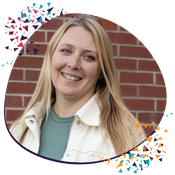
Occupational Therapist
Salem State University
USA
Anna Knox is a Visiting Instructor at Salem State University and a pediatric occupational therapist at Scaffold: A Community of Care in Massachusetts. She earned her Master’s in Occupational Therapy from Salem State University. Anna has worked alongside children and caregivers for over a decade, with specialized training in Sensory Processing and Integration, Pediatric Pelvic Dysfunction, Early Intervention, DIR/Floortime, Listening Therapies, and trauma-responsive care. Her practice is grounded in neurodiversity-affirming and family-centered principles, emphasizing strengths, autonomy, and meaningful engagement. She is deeply committed to advancing occupational justice, sensory health, and neurodiversity-affirming care across systems. Anna brings this focus into her continued learning, teaching, clinical practice, and community collaborations, supporting others in translating these values into everyday practice.
Adam Davis, Ma Ed (he/him) 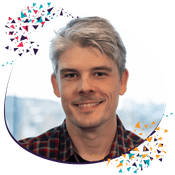
Therapeutic Game Master / Educator
foundry10
USA
Adam Davis is a professional therapeutic game master and educator with 15 years of experience designing and facilitating tabletop role-playing games that build community, resilience, and connection. In 2017, he cofounded Game to Grow, a nonprofit that grew to serve more than 150 youth weekly and trained thousands of practitioners across six continents to use RPGs in classrooms, clinics, hospitals, and libraries.
Adam now serves as a Games and Play Program Developer at foundry10, where he designs youth- and educator-facing initiatives exploring how games support engagement, well-being, and learning in schools and community spaces.
He is the co-author of Therapeutically Applied Tabletop Role Playing Games: The Game to Grow Method and co-creator of Critical Core, a therapeutic RPG used by more than 7,000 educators, therapists, and families worldwide. Adam has presented more than 70 times at over 30 conferences—including a keynote for the Washington Association of Marriage and Family Therapy—and his work has been featured by The New York Times, BBC, TIME, National Geographic, and Forbes.
Nick Walker, PhD (he/him) 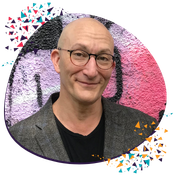
Professor of Psychology
California Institute of Integral Studies
USA
Dr. Nick Walker is a professor at California Institute of Integral Studies, and a principal architect and founding core faculty member of the school’s undergraduate Psychology and Psychedelic Studies programs. Over the past two decades his work has had a profound influence on the evolution of neurodiversity-related thought and practice. He is the author of the essay collection Neuroqueer Heresies and has co-edited multiple volumes of the annual neuroqueer story anthology Spoon Knife, as well as the forthcoming books Neurodiversity in Clinical Psychology & Counseling and The Handbook of Neurodiversity & Applied Linguistics. He also writes the urban fantasy/sci-fi/espionage webcomic Weird Luck, which among other things explores fictional forms of acquired neurodivergence.
Toni Solaru, OTD, MS, OTR/L, QMHP, (he/him) 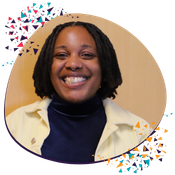
Cognitive Rehabilitation Specialist
Diverse-OT National
USA
Toni is a functional cognition specialist who is the founder of People’s OT is an occupational therapy practice rooted in disability justice, abolitionist health traditions, and anti-capitalist care. Inspired by the Black Panther Party’s People’s Clinics, People’s OT exists to address systemic barriers to healthcare access for disabled, chronically ill, neurodivergent, and marginalized community members.
Toni’s practice background includes community-based and inpatient psychiatry, stroke, TBI and brain injury, and cognitive rehabilitation. Additionally, Toni is the co-founder and Chair of Diverse-OT National, a national organization dedicated to education, leadership, and collective action in order to empower OTPs and students to provide care that is inclusive, just, and rooted in and responds to the lived experiences of communities most affected by injustice.
Toni received their Bachelor of Science in Human Ecology from Ohio State University, Master of Science in Occupational Therapy from the University of Wisconsin – Madison and occupational doctorate from Columbia University. The focus of Toni’s doctoral work was on the creation and validation of the “Client Agency and Self Determination Evaluation (CASE)” which aims to center the lived experiences of community-based adults diagnosed with a serious mental illness who rely on public insurances and social security benefits. Toni is passionate about delivering high-quality and client-centered services, health equity and justice, culturally informed teaching, and enjoys assisting clients achieve their personal goals.
Monique Botha, PhD, MSc, BA(Hons) (they/them) 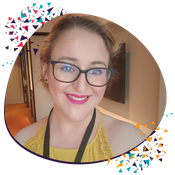
Associate Professor of Social and Developmental Psychology
Durham University
USA
Dr Monique Botha is a neurodivergent Social and Developmental Psychologist and Associate Professor at Durham University. They are also a member of the Centre for Neurodiversity and Development. They have also worked with autistic people and their families as a social care worker, prior to becoming a researcher. Their work focuses on minority stress, dehumanization, and inclusion for neurodivergent people, and how participatory research can be transformative when used properly. They have experience in a range of methods, as they tailor their methods with each project to maximize impact for the communities they work with. They were recently awarded the Autistic Self-Advocacy Networks “Nothing about us without us” award for research which can make a difference in the lives of autistic people. They also co-founded the Striving to Transform Autism Research Together Scotland network, and the Community Against Prejudice Towards Autistic People network - participatory research collectives aimed at tackling the inequalities faced by autistic people through participatory and ethically engage social research.
Dr Monique Botha is a neurodivergent Social and Developmental Psychologist and Associate Professor at Durham University. They are also a member of the Centre for Neurodiversity and Development. They have also worked with autistic people and their families as a social care worker, prior to becoming a researcher. Their work focuses on minority stress, dehumanization, and inclusion for neurodivergent people, and how participatory research can be transformative when used properly. They have experience in a range of methods, as they tailor their methods with each project to maximize impact for the communities they work with. They were recently awarded the Autistic Self-Advocacy Networks “Nothing about us without us” award for research which can make a difference in the lives of autistic people. They also co-founded the Striving to Transform Autism Research Together Scotland network, and the Community Against Prejudice Towards Autistic People network - participatory research collectives aimed at tackling the inequalities faced by autistic people through participatory and ethically engage social research.
Dr Monique Botha is a neurodivergent Social and Developmental Psychologist and Associate Professor at Durham University. They are also a member of the Centre for Neurodiversity and Development. They have also worked with autistic people and their families as a social care worker, prior to becoming a researcher. Their work focuses on minority stress, dehumanization, and inclusion for neurodivergent people, and how participatory research can be transformative when used properly. They have experience in a range of methods, as they tailor their methods with each project to maximize impact for the communities they work with. They were recently awarded the Autistic Self-Advocacy Networks “Nothing about us without us” award for research which can make a difference in the lives of autistic people. They also co-founded the Striving to Transform Autism Research Together Scotland network, and the Community Against Prejudice Towards Autistic People network - participatory research collectives aimed at tackling the inequalities faced by autistic people through participatory and ethically engage social research.
Damon Kirsebom (he/him) 
Nonspeaking Autistic Presenter / University Student / Advocate
Canada
Damon Kirsebom is a 25-year-old, nonspeaking autistic, university student.
He spent the first 14 years of his life without a reliable means of communication; and now uses an iPad (with a voice-output app). Damon was the keynote speaker at the Autism Alliance of Canada, and is a member of the Autistic Advisory Council for Canada’s National Autism Network. He has also acted as a presenter at two Canadian universities, and has written a chapter in a published book. Damon was a participant in Communication First’s short film, “Listen,” and is currently an interviewer on Canada’s version of “The Assembly.” In his free time, he focuses on physical activity (as a means of gaining greater body control), and is an avid mountain biker. Damon also enjoys producing educational videos, writing poetry, and is learning to draw and paint.